 Bio Peptides Labs
Research Use Only Labels: A Peptide Buyer’s Guide
Learn the limits of research use only labels, separate test results from use restrictions, and review supplier terms before a laboratory purchase.
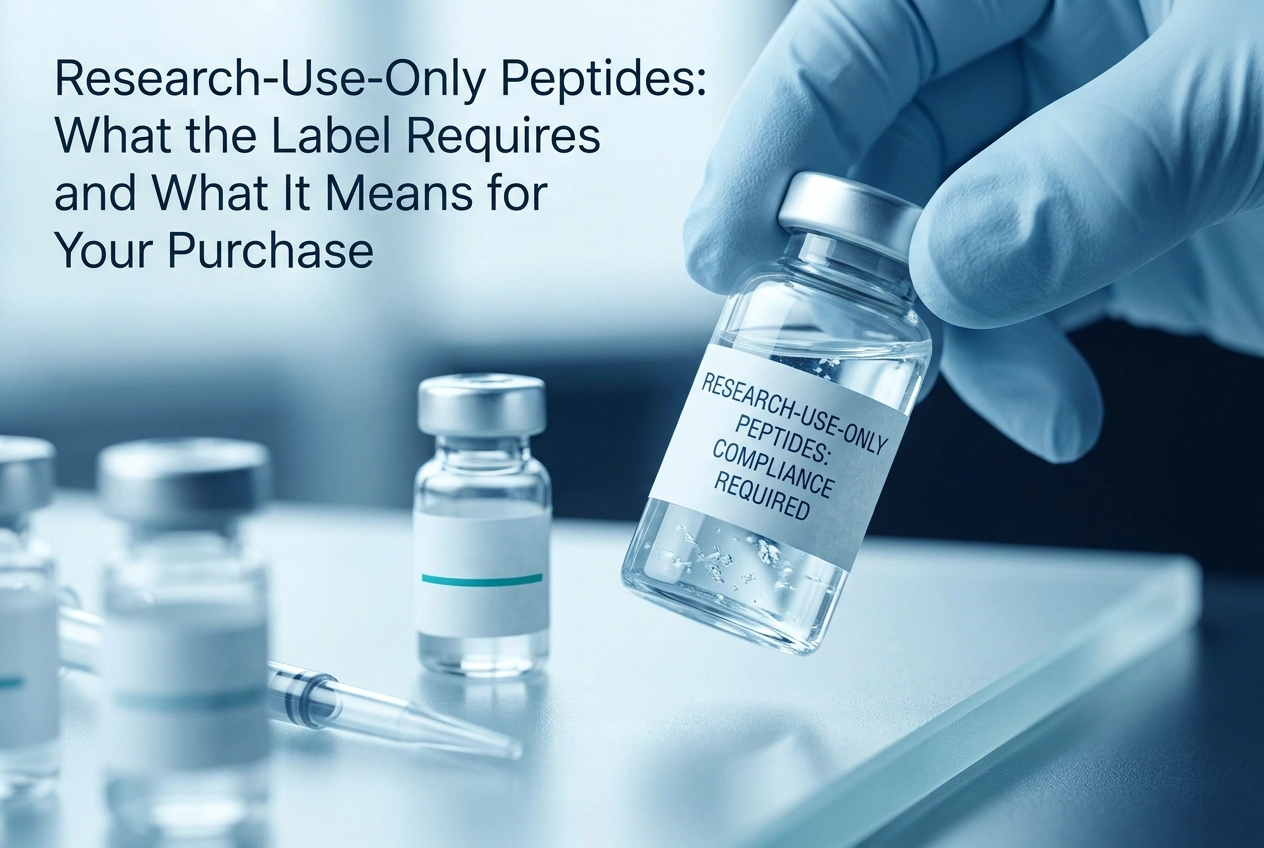
A research use only label is a starting point for a purchasing review, not a complete answer about a product's quality or regulatory status. For a laboratory buyer, the useful next step is to read the intended-use statement, the supplier's terms, and the available product records together.
This guide separates three questions that are often confused: what the seller says a material is for, what its analytical documentation reports, and what uses have actually been authorized. It provides general educational context, not a legal opinion about a particular product or transaction.
1. Read the research use only label in context
Do not treat “RUO” as one universal regulatory classification covering every peptide. FDA's RUO and IUO distribution guidance specifically concerns in vitro diagnostic products. Its scope should not be silently extended to every research chemical.
For peptide marketing, a disclaimer is not a substitute for examining intended use. In its June 17, 2026 warning letter to Wholesale Peptide, FDA explained that the website's evidence of intended human-drug use was not overcome by research-only and non-consumption wording. That is a specific enforcement example, not a finding about every supplier.
The practical takeaway: do not interpret a short label as FDA approval, a quality certificate, or permission for personal use. Product-specific legal questions require qualified advice and current, applicable sources.
2. Separate the use restriction from the test results
A certificate of analysis and a use restriction serve different purposes. A laboratory report describes the tests and results it actually contains. It does not convert a research material into a medicine or supply authorization for an unstated use.
Likewise, a research-only label does not tell you which tests were performed. Keep a separate record of the product identity, lot linkage, method, result, and any stated acceptance criterion. Our peptide COA checklist provides a document-review workflow without treating an unreported attribute as a passing result.
3. Review the supplier's actual terms
At Bio Peptides Labs, the research-use policy limits products to laboratory research by qualified professionals and excludes human or animal use. These are the site's stated restrictions; this article does not present them as a universal checklist of legal requirements for every seller.
The purchaser acknowledgment also sets an age requirement of 21 and requires research-only purchasing. Read the current policy before ordering. If your intended use does not fit the terms, do not place an order.
Do not infer that an age gate verifies professional credentials or that a completed checkout validates a research protocol. Those are different questions.
4. Ask focused questions before purchasing
Use the following questions as an internal review aid, adapting them to your organization's procedures:
Does the intended laboratory use fit the seller's written restrictions?
Are the product name, form, and lot details clear?
What analytical documentation is available for the material being supplied?
Do the product page and other communications contradict the stated use restriction?
Which questions need review by our laboratory lead, procurement team, or compliance adviser?
Example: A page marked research-only that also supplies a personal treatment schedule presents conflicting signals. Do not resolve that conflict by assuming the small-print disclaimer controls everything else.
Keep the decision and its evidence together
Retain the product record, applicable terms, lot-linked documentation, and written answers to unresolved questions in your purchasing file. Record when they were reviewed. This is a suggested recordkeeping practice, not a claim that collecting those documents establishes legal compliance.
For questions about Bio Peptides Labs records or wording, contact our team with the relevant page and product details. Please do not send patient information or request dosing guidance.
Research-only wording should make the boundary clearer, not obscure it. Read the label, verify the scope of the documentation, and seek qualified advice where the decision depends on law or your institution's requirements.
For laboratory research only. Not for human or veterinary consumption. This article does not provide medical, dosing, or legal advice.